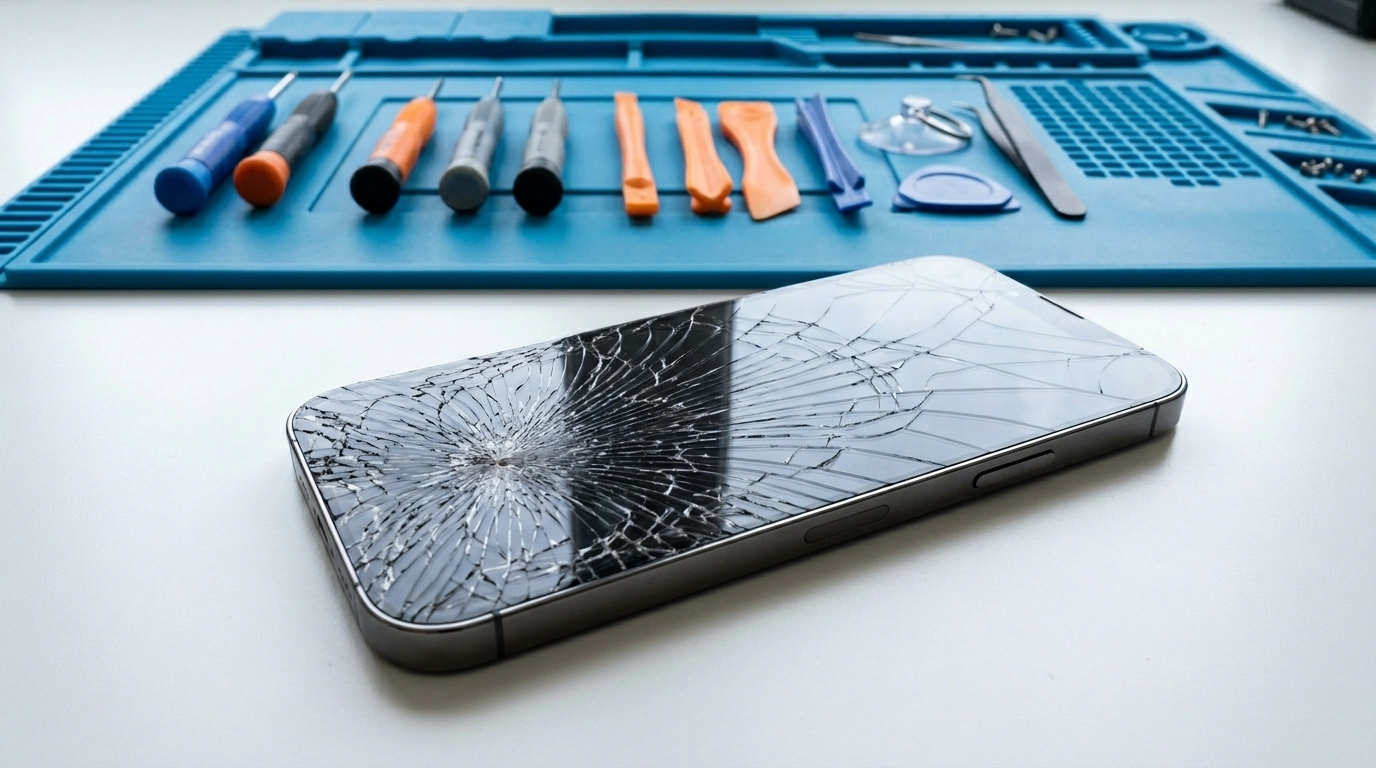

That sharp crack across your iPhone screen is never just a small inconvenience. It’s a reminder of how fragile even the most advanced technology can be. For us at Telespace, cracked screens are one of the most frequent issues we see. The damage can range from a faint scratch to a complete shatter that renders the screen unresponsive. And though it might seem like a purely cosmetic issue, a damaged screen can affect everything from touch sensitivity to internal hardware stability.
Before deciding what to do next, it helps to understand how severe the issue is and what your safest, most practical repair options are.
Assessing the Damage: How Bad Is It Really?
Every crack tells a different story, and not all require the same repair approach. Light surface scratches often affect only the outer glass, but once cracks deepen or spread, they can compromise touch response or display quality.
A quick self-assessment can help: if your screen still works but looks cracked, it might be a glass-only issue. However, if you notice dark blotches, flickering, dead pixels, or a completely blacked-out display, that indicates damage to the LCD or OLED layer underneath. This means a full screen replacement is required, not just a glass change.
You should also test Face ID, touch response, and brightness adjustment. These can fail subtly even before visible damage worsens.
It’s important to act quickly. Cracks may seem harmless at first, but they can let dust, oil, and moisture seep through the glass, damaging internal components over time. What starts as a small fracture could eventually cost much more to repair.
DIY Repairs: The Hidden Costs of “Doing It Yourself”
It’s natural to be tempted by quick online repair kits, especially when you find them for a fraction of professional service costs. The internet is full of videos that make screen replacements look simple. But iPhones are not designed for amateur disassembly.
Each model includes micro screws, heat-sensitive adhesive layers, and integrated sensors that demand specialized tools and precision. Missing even one calibration step can cause long-term functional issues.
A common mistake during DIY attempts is damaging the Face ID or proximity sensor. Another is installing non-calibrated screens that lead to brightness inconsistencies or inaccurate color tones. Some even use poor-quality adhesive that allows dust to enter, weakening the phone’s waterproofing.
We’ve seen countless phones come in after failed self-repairs — often costing more to fix than the original screen would have. DIY repair is rarely cheaper in the end. Unless you have the expertise, it’s better to leave iPhone screen replacements to certified technicians.
Understanding Your Screen Options: Genuine, OEM, or Aftermarket
Once you decide on a professional fix, the next step is choosing the type of screen. Most repairers offer one of three options: genuine Apple, OEM (original equipment manufacturer), or aftermarket.
Genuine screens are identical to the ones used by Apple and come with perfect compatibility and reliability. OEM screens are made by the same manufacturers but not supplied directly to Apple, offering nearly the same quality at a lower price. Aftermarket screens, on the other hand, are third-party imitations that vary widely in performance and durability.
While genuine and OEM parts maintain display quality, cheap aftermarket versions often suffer from poor color reproduction and weaker touch response. They may even drain your battery faster due to inefficient power use — a pattern that mirrors how faulty displays can accelerate battery depletion in certain Samsung models under similar conditions.
Choosing the right screen depends on how you use your phone and how long you plan to keep it. If you rely on your iPhone daily for work or creative tasks, investing in a high-quality replacement is worth it. Poor screens not only look bad but can strain your eyes and shorten the device’s lifespan.
Your Repair Pathways: Where to Go and What to Expect
Not all repair options are equal, and the best choice depends on your priorities — whether that’s time, cost, or warranty coverage.
Apple Authorized Repair: If your iPhone is still under warranty or covered by AppleCare+, this is the safest route. Apple ensures genuine parts and maintains your warranty, but it’s typically the most expensive option and can require appointment delays.
Certified Independent Repairers: For older or out-of-warranty models, an experienced independent technician offers more flexibility. They can match the repair to your budget, often completing it faster while still maintaining high standards.
Mobile and On-Site Repair Services: These are growing in popularity. Technicians come to your location and perform repairs on the spot — ideal for busy schedules. Always confirm part authenticity and technician credentials before booking.
Many technicians also assess whether repairing or replacing your device makes more sense, helping customers avoid spending unnecessarily on an aging model. That balance between repair and replacement can often determine long-term value — a concept that applies across all phone repairs, not just screens.
Avoiding Costly Mistakes After the Crack
A cracked screen can worsen rapidly if you’re not cautious. One of the biggest mistakes people make is continuing to use their phone without any protective measure. Small shards of glass can detach, and internal pressure can spread cracks further.
Using clear tape or plastic film as a “temporary fix” can trap dirt underneath, causing additional scratches. Similarly, online “hacks” that recommend heating or pressing the glass to “seal” cracks can damage the digitizer and adhesives permanently.
Ignoring the issue also means risking your warranty. Water and dust entering through cracks can corrode circuits, leading to malfunctions unrelated to the original damage but still invalidating coverage.
Beyond functionality, a cracked screen affects value too. An unrepaired iPhone can lose up to 40 percent of its resale value, even if it still functions. Repairing it with a high-quality part ensures better durability and helps retain that value should you choose to trade it later.
And while it might feel unnecessary to rush into a repair, think of it as preventive maintenance. The sooner you fix it, the less likely you’ll need to deal with compounded internal damage later.
Staying Crack-Free: Habits That Protect Your Screen
Even though iPhone glass is tough, prevention is still the best protection. Start with a tempered glass protector; it absorbs impact and prevents scratches that weaken the surface. A sturdy case with raised edges can reduce the chance of direct screen impact during falls.
But protection goes beyond accessories. Simple habits matter too — avoid placing your phone face-down on hard surfaces, and don’t keep it in the same pocket as keys or coins. Cleaning your screen regularly with a microfiber cloth prevents tiny abrasive particles from leaving micro-scratches.
Environmental factors also play a role. Moving abruptly between hot and cold environments can stress the glass, especially if it’s already weakened. Treat your phone like a precision device rather than an accessory; small acts of care significantly extend its life.
We’ve noticed that phones regularly maintained and repaired promptly tend to last much longer — their owners experience fewer follow-up issues and maintain better overall performance. Regular upkeep isn’t just about looks; it’s about preserving function and value.
A Clear Screen, A Clear Choice
Cracked screens might be common, but every repair decision still matters. Understanding the type of damage, choosing the right replacement parts, and trusting qualified technicians are all steps toward restoring your iPhone’s performance and safety.
At Telespace, we focus on transparency, precision, and care — ensuring that every repair we perform gives your device a second life. Whether it’s an iPhone screen replacement, a deeper internal issue, or assessing whether a repair is worth pursuing, our goal is simple: helping you make informed, cost-effective choices for your technology.
Your iPhone can look and feel brand new again with the right attention. Sometimes, fixing a cracked screen isn’t just about restoration — it’s about giving your device the longevity it deserves.