
At Telespace, we’ve seen firsthand how a rough idea on paper can evolve into a precise, physical object—ready to perform, inspire, or simplify life. This transformation is made possible through the detailed, thoughtful craft of 3D design. What once belonged to the realm of industrial giants is now a flexible, accessible tool across countless industries, making creativity and technical problem-solving more unified than ever.
From Concept to Creation: The Foundation of 3D Design
From architecture and manufacturing to education and repair, 3D design is reshaping how we create value. It allows objects to be conceptualised, refined, and brought to life with unprecedented precision and efficiency. Let’s explore how this powerful discipline makes that journey possible—and why it’s more than just a technical process. It’s an art form rooted in purpose.
All great designs start with a question: What problem does this solve? Whether it’s a custom tool, a machine part, or a functional piece of homeware, 3D design begins by understanding the object’s role and the environment it will live in. Functionality, feasibility, and visual appeal must all be balanced, and that starts from the first sketch or idea.
Designers typically use advanced 3D modeling software like Fusion 360, Rhino, SolidWorks, or Blender. These tools allow intricate manipulation of dimensions, textures, and curves—creating digital blueprints that are both artistic and technical.
This digital phase lays the foundation for everything that follows. It’s where decisions around size, scale, symmetry, and structural integrity take place. Mistakes caught here save material, time, and cost later. And as we touched on in our adjoining piece about fixing with 3D printing, many of these design decisions are what make repairable, modular solutions possible in the first place.
The Role of CAD: Precision Meets Innovation
Computer-Aided Design (CAD) is more than just drawing in three dimensions. It provides engineers and creators with the ability to analyse performance factors before a model ever gets printed. From heat tolerance to mechanical stress, CAD allows for simulations and digital tests to fine-tune a product’s capabilities.
In professional settings—like those we support at Telespace—this is especially critical. Aerospace engineers, for example, depend on 3D CAD models to ensure aerodynamic efficiency. In consumer goods, designers use CAD to fit multiple components into sleek, minimal packaging. It’s not just about building what looks good—it’s about making sure it functions under pressure, both literally and figuratively.
CAD also allows for parametric design, where changes to one dimension automatically adjust others. This is especially useful for iterative prototyping, which we’ll explore next.
Materials Matter: Designing with Production in Mind
An object’s design is only half the story. How that object interacts with the real world depends on its material properties. For a 3D-printed object, this can mean the difference between a durable, high-performance tool and a fragile prototype.
Designers at Telespace work with a wide range of materials, including:
- PLA (Polylactic Acid): A biodegradable plastic great for low-stress parts and early prototypes.
- ABS (Acrylonitrile Butadiene Styrene): Stronger and more heat-resistant, ideal for functional components.
- PETG, Nylon, and TPU: Each offering unique properties like flexibility, impact resistance, or food safety.
- Metal and Composite Filaments: For industrial-strength or high-precision parts.
Each of these materials requires different print settings and design accommodations—like wall thickness, infill density, and support structures. As we noted when discussing sustainable repair strategies, the right material choice is often what gives a reused or reimagined item its second life.
Designers must think beyond the screen, imagining how their digital model will behave in the physical world—under weight, pressure, or daily use.
Iteration and Prototyping: Designing for Evolution
Rarely does the first version of a design make it to production. One of 3D design’s greatest advantages is how easily it supports iteration. A digital model can be adjusted, reprinted, and tested multiple times without the significant delays associated with traditional manufacturing.
This is invaluable for startups, engineers, and creatives alike. A medical device designer, for instance, may go through a dozen prototypes before finding the right ergonomic fit. A robotics engineer might tweak a gear’s size by tenths of a millimetre to optimise torque. 3D design enables this rapid feedback loop.
At Telespace, we encourage clients to treat the design process as exploratory. With each version, there’s room to improve, rethink, and get closer to the ideal outcome. It’s not uncommon for us to work across five or six revisions—sometimes more—especially for highly technical parts where perfection is essential.
Real-World Applications: From Art to Engineering
3D design isn’t just for factories and laboratories—it’s used by artists, educators, entrepreneurs, and even hobbyists. Its flexibility means it can be used to make prosthetics, phone holders, drone frames, product packaging, musical instruments, or even custom jewellery.
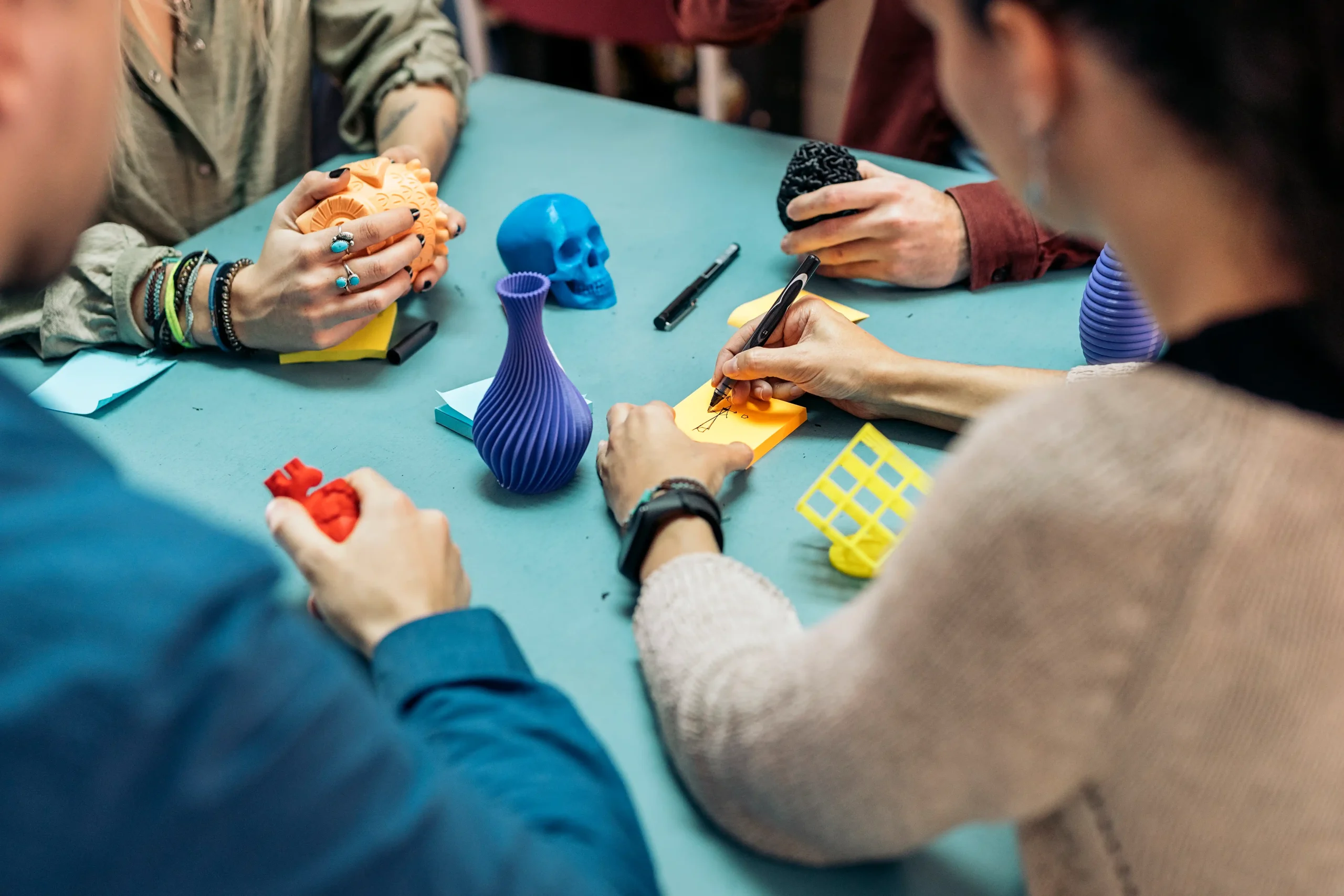
Architects use 3D design to bring concepts to life in miniature, making it easier for clients to visualise a space before it’s built. Schools use printed models to make learning tactile, whether it’s a 3D-printed heart in biology or a functioning gear system in physics.
And as we’ve seen in our related insights on repairing instead of replacing, these same design principles can be applied to give new life to broken items—turning waste into utility with a few design tweaks. That mindset shift is part of what makes 3D design so powerful. It offers not just a way to create, but a way to rethink consumption entirely.
Crafting the Future One Layer at a Time
At Telespace, we view 3D design as more than a technical process—it’s a creative collaboration between vision, function, and innovation. Whether we’re working with a small business trying to prototype a new product, or an individual needing a one-off part to complete a personal project, our goal remains the same: to bring sketches to life with clarity, quality, and care.
We take pride in our ability to work across disciplines, timelines, and material types. Our strength lies in understanding not just how to print an object—but how to design it so it performs well, lasts longer, and fits perfectly into the user’s needs.
Designing in 3D is about building smarter, with purpose. And as more people discover what’s possible when ideas leave the page and become something you can hold, we’re excited to be part of that transformation—layer by layer, idea by idea.