
As small businesses face rising market demands and increasing pressure to stand out, many are leveraging 3D printing to scale smartly, without the traditional burdens of mass manufacturing.
The transformation is clear: today’s 3D printers aren’t just creating drafts—they’re producing shelf-ready products, spare parts, packaging, and more. Here’s how this shift is empowering entrepreneurs and startups to build competitive, flexible, and forward-thinking operations.
From Concept to Commerce: Bridging Design and Delivery
Small businesses thrive on innovation, but bringing a new idea to life can be expensive and slow. Traditionally, product development required third-party tooling, injection moulding, or overseas manufacturing—all of which came with significant lead times and financial risk. 3D printing flips that script.
By enabling in-house design and on-demand production, businesses can turn ideas into real, testable products within hours or days. Adjustments to shape, fit, or function can be made in the design file and reprinted instantly—no delays, no waste. This means faster go-to-market timelines, less dependence on large suppliers, and far greater control over the creative process.
Whether it’s a boutique eyewear brand refining frame styles or a tech startup adjusting a product’s casing to better fit components, 3D printing brings agility to the heart of business strategy.
And with many of these businesses now exploring materials that are both durable and eco-conscious, the intersection of innovation and sustainability becomes more tangible than theoretical.
Batch Production That Makes Sense
For a long time, small-batch manufacturing wasn’t economically viable. Traditional factories had minimum order quantities and setup costs that made limited runs financially unrealistic. 3D printing breaks that barrier by making short production runs accessible, affordable, and precise.
This is ideal for businesses offering seasonal collections, pre-orders, or trial products. A local home décor company, for example, can launch a themed candleholder series in batches of 25 or 50, rather than risking thousands of units in stock. This not only reduces upfront costs and storage needs but also allows brands to test demand and iterate based on real-time feedback.
On-demand production also supports better inventory management. Businesses no longer need to overproduce or discount excess stock—they print what they need, when they need it. That means less financial pressure, less waste, and greater adaptability.
This also naturally supports a leaner, more responsible production cycle—a trend we’re seeing more as environmental awareness becomes a core part of modern business identity.
Customisation at Scale
The ability to customise products used to be a luxury reserved for premium brands or skilled artisans. Now, thanks to 3D printing, small businesses can offer personalisation as a core feature of their products—without losing time or profits.
A dental clinic, for example, can print patient-specific orthodontic tools. A pet accessory company can design personalised name tags or harnesses. Even a fashion label can offer clients the ability to tweak jewellery or bag components to suit their style—all using the same base model, slightly adjusted with CAD software.
What makes this scalable is the digital nature of the process. There’s no need to change machinery or retrain staff. One product can be printed in dozens of variations by simply adjusting the digital file.
Not only does this boost customer engagement, but it also builds brand loyalty. People love products that reflect their identity—and small businesses using 3D printing to offer that connection are reaping the rewards.
Lower Overheads, Higher Creativity
Starting and running a small business means juggling budgets, space, and resources. Traditional manufacturing often required a substantial upfront investment—not just in materials and equipment, but in space, labour, and logistics.
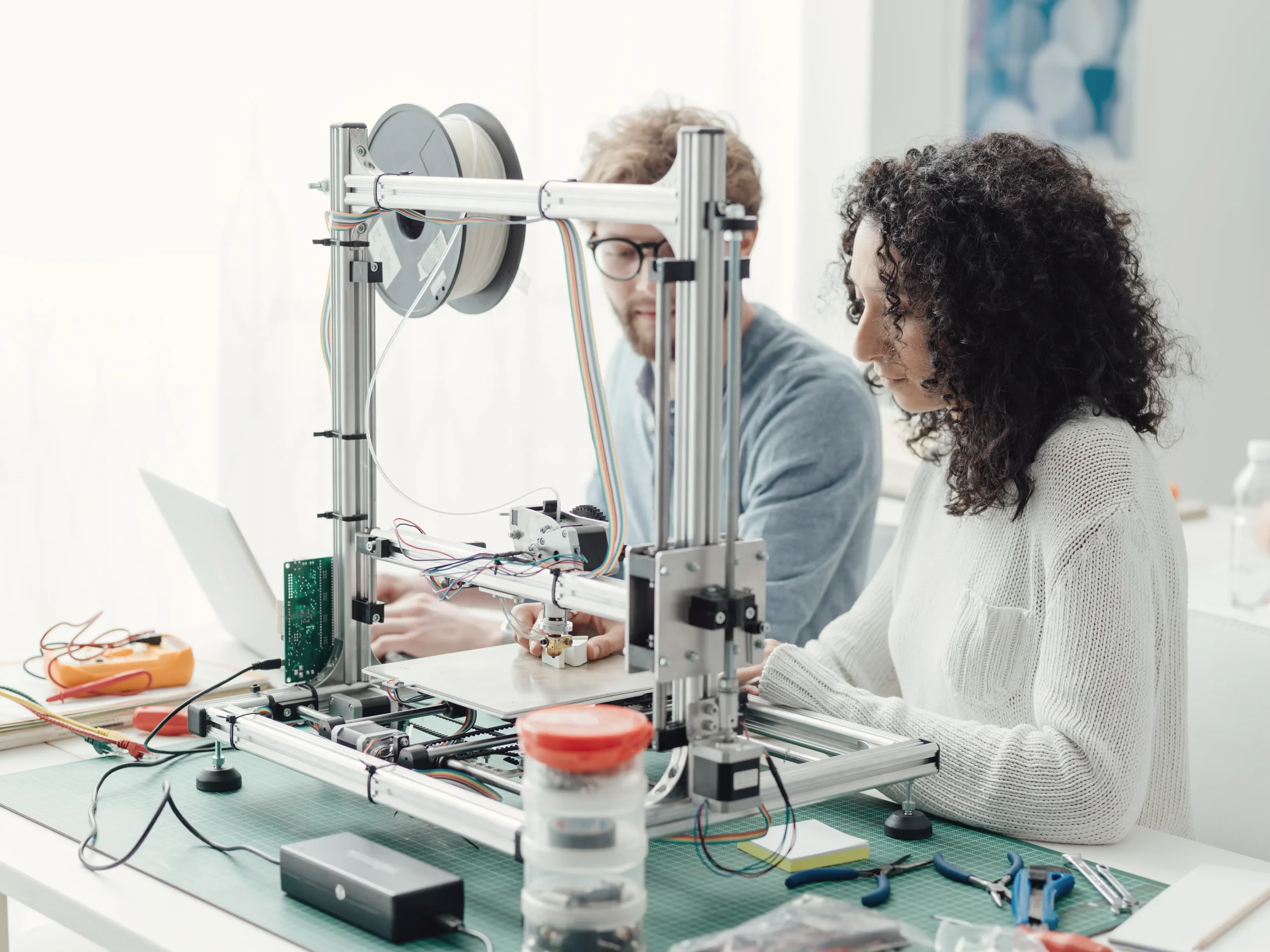
With 3D printing, much of that weight is lifted. All that’s needed is a desktop printer, filament or resin, a computer, and software. This makes it possible for entrepreneurs to design and manufacture products from a home studio, co-working space, or small shopfront.
The reduced costs enable more experimentation. A small toy company, for example, can print five prototypes in a week, test them with customers, and quickly refine the most popular design. It’s not just efficient—it fuels creative confidence.
This blend of cost-efficiency and creative control is not just good for business—it echoes broader shifts toward sustainable entrepreneurship.
Repairs, Parts, and Circular Thinking
Scaling isn’t always about creating new things—it’s also about improving what already exists. More and more, small businesses are using 3D printing to reduce waste and extend product lifecycles through repairs and modular upgrades.
Let’s say a kitchen appliance company wants to offer replacement knobs or custom-fit attachments. Instead of outsourcing to a third-party supplier, they can print the parts in-house or provide downloadable files for customers to print themselves. This lowers the cost of customer service while reducing landfill waste.
The same applies to service-based businesses—bike shops printing discontinued components, mobile repair shops crafting one-off casing parts, or hobby stores creating rare game pieces.
This ability to repair and upgrade rather than replace is quietly driving a new kind of consumer relationship—one based on longevity, trust, and practicality.
Real-Time Innovation and Fast Pivots
When trends shift or customer needs evolve, speed becomes a competitive advantage. 3D printing allows small businesses to pivot quickly—whether to experiment with new materials, launch a product variant, or respond to supply chain disruptions.
Imagine a maker business that sells plant pots online. If a new interior design trend highlights geometric shapes, they can model and print a fresh range within a few days, responding to the market far faster than traditional manufacturers.
Additionally, for businesses facing seasonal swings, custom requests, or evolving regulations (especially in healthcare and packaging), 3D printing offers an unmatched level of adaptability.
This flexibility allows small brands to stay fresh, responsive, and forward-looking—even in uncertain times.
At Telespace, we’re proud to support this new wave of smart scaling, where agility and sustainability work together. 3D printing has moved far beyond its prototyping roots—it’s enabling bold ideas, faster launches, lower environmental impact, and more connected customer experiences.
We’re committed to helping businesses unlock the full potential of 3D printing—whether that means producing short-run goods, innovating sustainably, or simply imagining what’s next. Because in a world where flexibility is power, 3D printing isn’t just a tool. It’s a strategy.