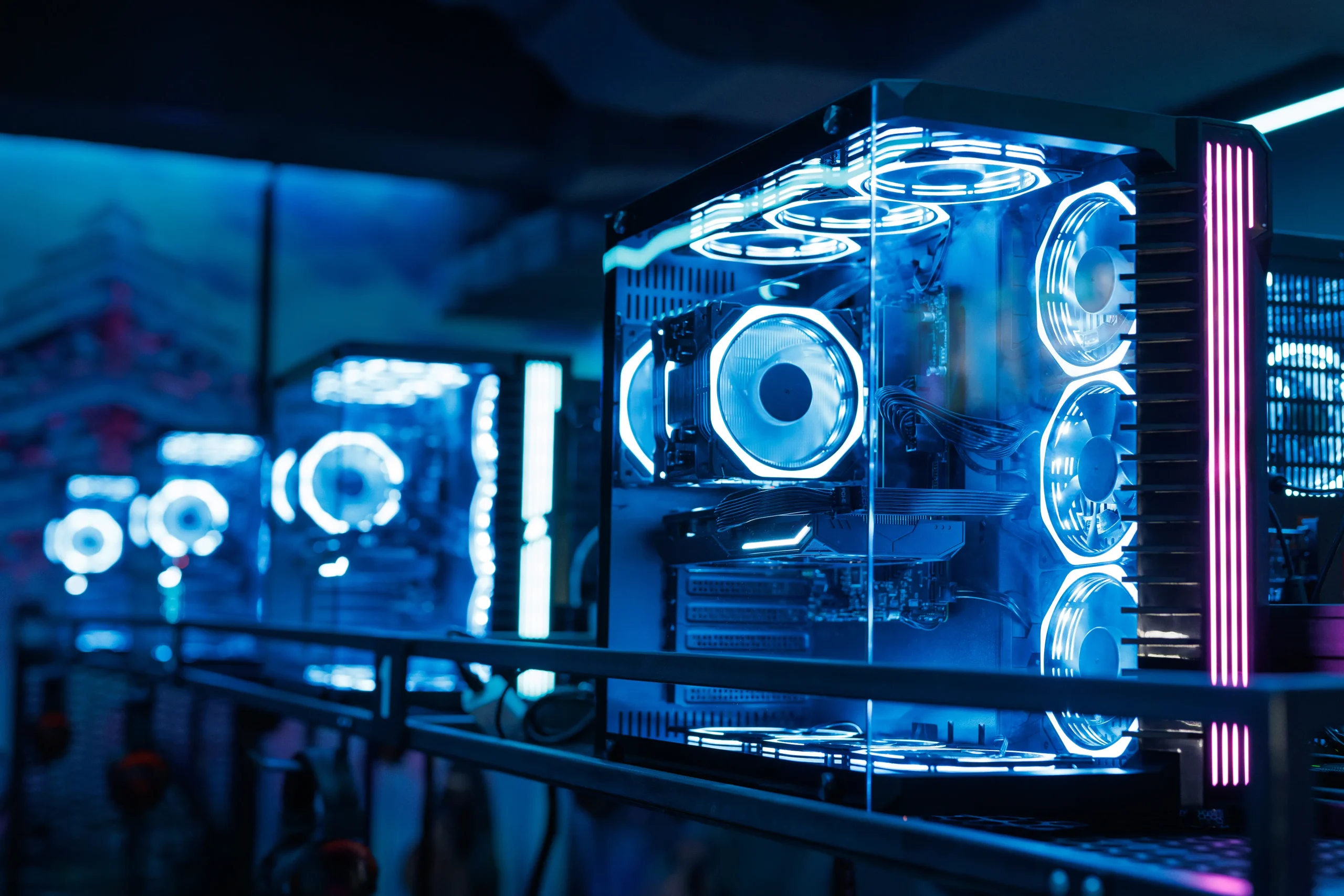

Gaming in Perth has evolved far beyond casual entertainment. Competitive titles, streaming, content creation, and high-resolution gaming have turned a gaming PC into something closer to a performance machine than a simple home computer. Because of that shift, many gamers eventually face a choice that shapes their entire setup. Should you invest in a custom-built gaming PC, or buy a prebuilt system that is ready to go?
Both options can deliver strong performance. The real difference lies in control, flexibility, and how the system grows with you over time.
At Telespace, we often see gamers weighing these two paths while trying to balance performance, price, and convenience. The right answer depends less on trends and more on how you plan to game.
The Appeal of Custom Gaming PCs
A custom gaming PC is exactly what it sounds like. Every component is chosen intentionally. The processor, graphics card, cooling system, storage, and even the case design are selected to match the user’s needs.
For many gamers, this level of control is the biggest advantage.
Instead of accepting a fixed configuration, a custom system can be designed around specific priorities. Competitive gamers often want extremely high frame rates. Streamers may require additional RAM and faster storage for recording sessions. Others want a balanced system capable of handling modern games at high graphics settings.
Modern custom builds commonly feature hardware such as Intel Core i5 or Ryzen processors, dedicated NVIDIA RTX graphics cards, and NVMe solid-state storage. Systems like the Blaze Force custom computer available through Telespace combine an Intel i5-13500 processor, RTX 4060 Ti graphics, and 32GB memory to support demanding gaming and multitasking environments.
For many Perth gamers, the final price of a custom system is shaped less by branding and more by the specific components chosen for performance, storage, and graphics capability.
This flexibility is why custom PCs remain popular among players who want more control over their gaming experience.
Prebuilt Gaming PCs and the Convenience Factor
Not everyone wants to research motherboards, compatibility lists, and cooling solutions. Prebuilt gaming PCs exist precisely for this reason.
A prebuilt system arrives assembled, tested, and ready to run. Once connected to a monitor and peripherals, the system can begin installing games immediately. That simplicity makes prebuilts appealing to many new PC gamers.
The biggest advantages often revolve around convenience:
• Immediate setup without hardware research
• Full system warranty from a single vendor
• No risk of assembly mistakes
For someone moving from console gaming to PC, this simplicity can be extremely helpful.
However, prebuilts are usually designed to satisfy a wide range of users rather than a specific gaming style. Manufacturers sometimes choose generic components that meet performance requirements but may not maximise upgrade flexibility later.
That does not make them poor systems. It simply means they prioritise accessibility over fine-tuned hardware selection.
Hardware Balance and Real Gaming Performance
When comparing custom and prebuilt gaming PCs, raw specifications rarely tell the entire story. Performance is often determined by how well the hardware works together.
A gaming PC functions best when its components are balanced. Pairing a powerful graphics card with a weak processor can create performance bottlenecks. Similarly, fast GPUs may struggle if paired with slow storage or insufficient RAM.
Custom builds allow users to create this balance intentionally.
Consider a configuration built around an AMD Ryzen 7 7800X3D processor paired with RTX 4070 graphics and high-speed DDR5 memory. Systems like this prioritise gaming workloads while maintaining excellent multitasking performance for streaming or creative tasks.
Experienced PC gamers often prioritise component balance rather than simply chasing the most powerful single part.
Prebuilt systems can still achieve good balance, but the user typically has less control over how those decisions were made.
For players who enjoy researching hardware and optimising performance, that control becomes part of the appeal.
The Long Game: Upgrades and Future Flexibility
One of the most overlooked differences between custom and prebuilt PCs is what happens years after purchase.
Gaming hardware evolves rapidly. Graphics cards improve, storage technologies advance, and new games demand higher performance. A gaming PC that can adapt to those changes will last far longer.
Custom PCs usually provide more flexibility for upgrades. Standardised parts make it easier to replace or improve components without rebuilding the entire system.
Common upgrade paths include:
• Installing a more powerful graphics card
• Expanding RAM for multitasking or streaming
• Adding additional NVMe or SSD storage
Prebuilt systems sometimes limit these options. Compact cases, smaller power supplies, or proprietary components can make upgrades more complicated.
Many experienced builders approach their first gaming PC as a starting point that evolves gradually through upgrades rather than being replaced entirely.
This mindset often turns a single purchase into a system that grows alongside the user’s gaming needs.
Understanding Gaming PC Costs in Perth
Budget plays a major role in deciding between custom and prebuilt systems. The belief that custom PCs are always cheaper is not entirely accurate. Prices depend heavily on graphics cards, processor demand, and component availability.
What custom systems do offer is control over how the budget is spent.
Instead of paying for aesthetic features or bundled components, users can direct most of their budget toward the parts that influence gaming performance the most.
Typical gaming PC price ranges in Perth generally fall within three broad categories.
Entry level systems can begin around $1,000 to $1,500, suitable for esports titles and moderate gaming workloads. Mid-range builds between $1,500 and $2,500 often deliver strong performance for modern games at high settings. High performance systems can exceed $3,000 when equipped with powerful graphics cards and advanced cooling solutions.
Some systems available through Telespace range from entry-level gaming computers around $1,050 to advanced custom builds exceeding $5,000 depending on the hardware configuration and performance level.
Graphics cards often represent the largest portion of the total cost, particularly for gamers targeting high frame rates or 4K resolution.
Finding the Right Path for Your Gaming Setup
The choice between custom and prebuilt gaming PCs is rarely about which option is objectively better. Instead, it reflects how each gamer approaches technology.
Players who enjoy exploring hardware, researching components, and gradually upgrading their systems often gravitate toward custom builds. The process itself becomes part of the experience.
Gamers who prefer simplicity may lean toward prebuilts, appreciating the ability to start gaming without technical setup.
At Telespace, we help gamers explore both directions while focusing on practical performance, reliable hardware, and balanced system design. Whether someone chooses a fully custom gaming build or a ready-to-play system, the goal remains the same. Delivering a machine that performs consistently and supports the way they actually play.
A gaming PC ultimately becomes more than a collection of parts. It becomes the centre of late-night matches, immersive worlds, and countless hours spent exploring everything modern games have to offer.