
Turning a digital design into something you can hold is no longer limited to industrial factories or research labs. Modern additive manufacturing has made production accessible to designers, startups, engineers, and hobbyists alike. At Telespace, we work with creators who arrive with wildly different goals, from rapid prototypes to refined functional components, and one question appears more than any other: should a project be printed using FDM or SLA?
The answer is rarely about which technology is better. It is about alignment. Each method shapes objects differently, behaves differently under stress, and serves different creative intentions. Understanding those differences makes the path forward clearer long before a model reaches the printer.
Two Paths to the Same Idea
Both FDM and SLA build objects layer by layer, yet the way those layers form could not be more different.
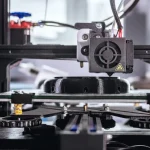
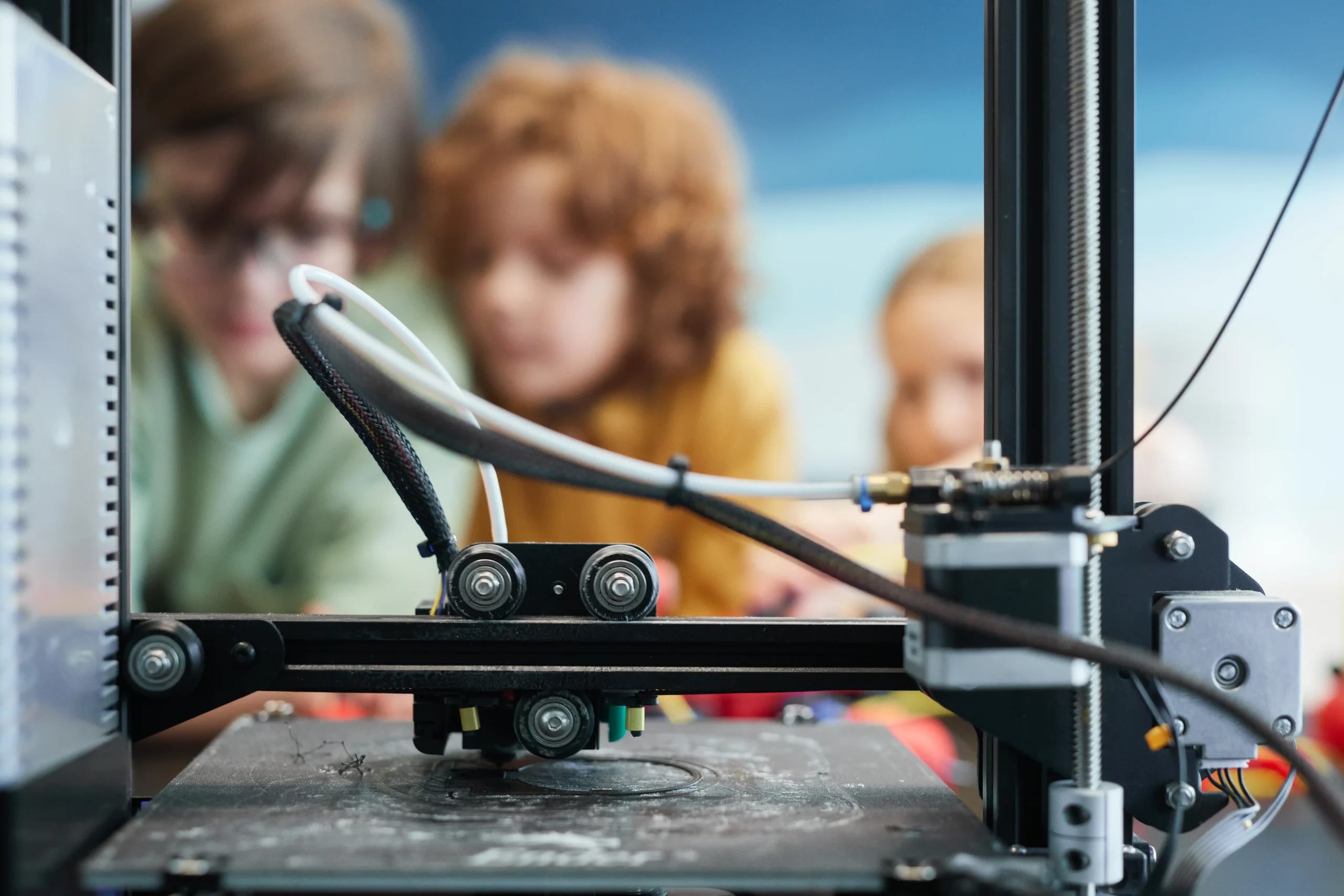
FDM (Fused Deposition Modeling) works by melting thermoplastic filament and depositing it precisely along programmed paths. Imagine drawing an object line by line with heated material that solidifies as it cools. The process is mechanical, visible, and dependable.
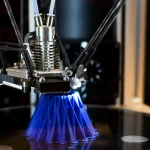
SLA (Stereolithography) replaces melted plastic with liquid resin cured by light. A laser or UV source hardens resin selectively, forming incredibly fine layers that stack into a finished model. Instead of extrusion, the object emerges from a chemical transformation.
This fundamental contrast influences everything that follows: strength, detail, cost, finishing, and real world usability.
Surface Detail and Visual Precision
When appearance matters, printing technology becomes immediately noticeable.
SLA printing is widely chosen for projects demanding smooth surfaces and intricate geometry. Fine textures, sharp edges, miniature components, and organic curves benefit from the extremely thin layers produced by resin curing. Designers working on display models, jewellery prototypes, or detailed product concepts often gravitate toward SLA because minimal post processing is required to achieve a refined look.
FDM, on the other hand, reveals subtle layer lines. These are not flaws but characteristics of the extrusion process. For many applications, especially mechanical parts, this texture is irrelevant or even beneficial because it reflects durability rather than delicacy.
Instead of thinking in terms of quality versus compromise, it helps to think of visual realism versus structural practicality.
[LINK-NEXT:Certain thermoplastics used in extrusion printing are selected specifically because they tolerate repeated stress and temperature variation without losing form, making them suitable for parts expected to function rather than simply be observed.]
Strength, Functionality, and Everyday Use
A beautiful prototype is useful, but a functional component must survive real conditions.
FDM prints generally excel in durability. Common engineering plastics provide impact resistance and flexibility, making them ideal for brackets, housings, fixtures, or replacement parts. Layer bonding direction still matters, yet properly oriented prints can handle significant mechanical loads.
SLA parts often achieve excellent dimensional accuracy but may be more brittle depending on resin type. They perform well for concept validation, molds, casting masters, and precision assemblies where tolerances matter more than impact resistance.
Think of it this way:
- FDM favors utility and endurance
- SLA favors precision and presentation
Neither replaces the other. They simply answer different questions during development.
[LINK-NEXT:Projects intended for continuous handling or mechanical testing often transition toward tougher polymers once geometry has been validated, allowing prototypes to evolve naturally into usable components.]
Speed, Scalability, and Cost Considerations
Production timelines and budgets influence technology choices as much as technical requirements.
FDM printing is typically more economical, especially for larger parts. Filament materials are accessible, and prints scale efficiently when size increases. For functional prototypes or iterative testing, this allows multiple revisions without significant cost escalation.
SLA printing involves resin materials and additional post processing steps such as washing and curing. While individual small prints can be efficient, larger volumes or bulkier parts increase expenses.
A practical rule often applies:
- Large, structural models lean toward FDM
- Small, highly detailed objects lean toward SLA
This distinction becomes especially important during early development phases where multiple versions are produced before final approval.
Post Processing and Workflow Experience
The printing process does not end when the machine stops.
FDM prints may require support removal and optional sanding if a smoother finish is desired. Many projects move directly into use without additional treatment, particularly functional components.
SLA workflows include cleaning uncured resin and UV curing to achieve full strength. The result can be exceptionally clean surfaces, though the process requires careful handling.
Each workflow suits different environments. Workshops prioritizing speed and practicality often appreciate FDM simplicity, while studios focused on aesthetics accept extra steps in exchange for finer results.
[LINK-NEXT:Material selection frequently determines how much finishing is required, since some printing polymers are engineered to balance printability with surface quality straight off the build plate.]
Choosing Based on Purpose, Not Popularity
Technology decisions become easier when the project’s purpose leads the conversation.
Choose FDM when:
- Strength and durability matter most
- Parts are large or structural
- Iteration speed is important
- Cost efficiency is a priority
Choose SLA when:
- Fine detail defines success
- Smooth surfaces are essential
- Small components require precision
- Presentation quality outweighs mechanical stress
Many successful workflows actually combine both methods. Designers validate shapes with SLA, then shift to FDM for functional testing or production runs. The technologies complement rather than compete.
Where Ideas Take Physical Form
3D printing is less about machines and more about translation. A concept moves from imagination into measurable space, gaining weight, texture, and usability along the way. The right printing method simply ensures that transformation happens efficiently and accurately.
We see projects arrive as sketches, CAD experiments, or ambitious inventions, and the most successful outcomes come from matching technology to intention rather than chasing trends. Whether a design demands durability, visual clarity, or balanced performance, understanding FDM and SLA allows creators to move forward with confidence.
At Telespace, models can be uploaded, materials selected, and production handled through a streamlined process designed for flexibility and precision, supporting everything from early prototypes to finished parts with reliable turnaround and tailored material choices.
The question is never which technology wins. The real question is what your project needs to become real.